
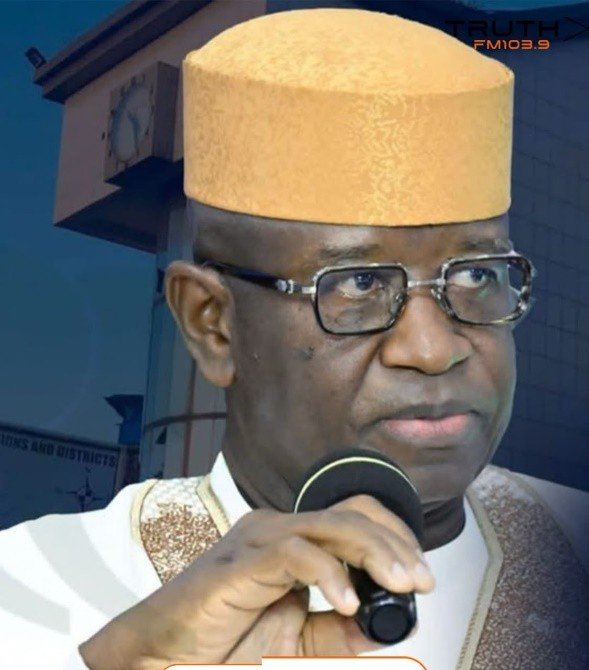
By Mackie M. Jalloh
President Julius Maada Bio has announced that the Government of Sierra Leone is moving ahead with plans to increase electricity generation from the Bumbuna Hydroelectric Power Station by an additional 50 megawatts, describing the initiative as a major step toward addressing the country’s long-standing electricity supply challenges.
The President made the announcement during a Presidential Town Hall Meeting held in Makeni, where he responded to questions from citizens on the recurring problem of unstable electricity supply affecting households, businesses, and public institutions across the country.
Addressing concerns over frequent power outages, President Bio acknowledged that access to reliable electricity remains one of Sierra Leone’s most pressing development challenges. However, he assured citizens that the government is continuing to invest in expanding energy generation and strengthening the national electricity infrastructure to meet the country’s growing demand.
According to the President, increasing generation at the Bumbuna Hydroelectric Power Station by 50 megawatts forms part of a broader strategy to improve the reliability and availability of electricity throughout Sierra Leone. He expressed confidence that the planned expansion would significantly strengthen the national grid and contribute to improving power supply for communities, businesses, and essential public services.
President Bio noted that Sierra Leone currently generates approximately 150 megawatts of electricity, while national demand has risen to around 400 megawatts. This substantial gap between electricity production and consumption, he explained, continues to place enormous pressure on the country’s energy system and contributes to the persistent load shedding experienced in many parts of the country.
He emphasized that closing this supply deficit requires sustained investment in power generation infrastructure alongside improvements in electricity transmission and distribution networks.
While outlining the government’s plans, President Bio also stressed that ensuring a stable electricity supply is not solely the responsibility of government institutions. He called on citizens to play a more active role in protecting public infrastructure, arguing that community ownership and vigilance are essential to safeguarding investments made in the energy sector.
The President strongly condemned the increasing incidents of theft and vandalism targeting electricity infrastructure, including transformers, transmission equipment, and utility poles. He described such criminal activities as serious obstacles to national development, noting that they not only disrupt electricity supply but also impose significant financial costs on the government.
“Only in Sierra Leone do you see people stealing transformers and electricity poles,” the President remarked, expressing concern over the destruction of public assets that are intended to improve the lives of communities.
He urged citizens to reject acts of vandalism and instead work collectively to protect electricity installations within their localities. According to him, safeguarding public infrastructure should be regarded as a shared national responsibility rather than the sole duty of security agencies or utility providers.
President Bio further acknowledged that the country’s energy sector continues to face operational and institutional challenges. Although he clarified that he is not directly responsible for managing the Ministry of Energy, he admitted that some of the issues he has observed within the sector have been disappointing.
Despite these challenges, he maintained that the government remains committed to implementing reforms and investing in projects capable of improving electricity generation and expanding access to power across Sierra Leone.
The planned expansion of the Bumbuna Hydroelectric Power Station is expected to play a key role in reducing the country’s dependence on expensive emergency power solutions while supporting economic growth through more reliable electricity for industries, businesses, schools, hospitals, and households.
Energy experts have consistently identified inadequate generation capacity as one of the principal barriers to industrial development, investment, and improved public service delivery. Increasing domestic electricity production is therefore considered critical to achieving Sierra Leone’s broader economic development objectives.
President Bio concluded his remarks by renewing his appeal for greater public cooperation in protecting national infrastructure. He emphasized that government investments alone cannot guarantee reliable electricity if transformers, poles, transmission lines, and other critical facilities continue to be vandalized or stolen.
He called on traditional leaders, local authorities, youth groups, and community members to remain vigilant and work closely with law enforcement agencies to prevent acts of sabotage against public property.
According to the President, achieving a stable, reliable, and sustainable electricity supply will require a combination of increased investment in energy generation, improved management of the sector, and active citizen participation in preserving the infrastructure that powers national development.
The announcement of the planned 50-megawatt expansion at Bumbuna signals the government’s continued focus on addressing Sierra Leone’s energy deficit, with the expectation that improved electricity generation will enhance economic productivity, strengthen public services, and improve the quality of life for citizens across the country.