
By Mackie M. Jalloh
The First Lady of Sierra Leone, Dr Fatima Maada Bio, has called for a stronger representation of women in Africa’s leadership structures, warning that the continent’s ambitions for sustainable development and lasting peace cannot be achieved while women remain excluded from critical decision-making processes.
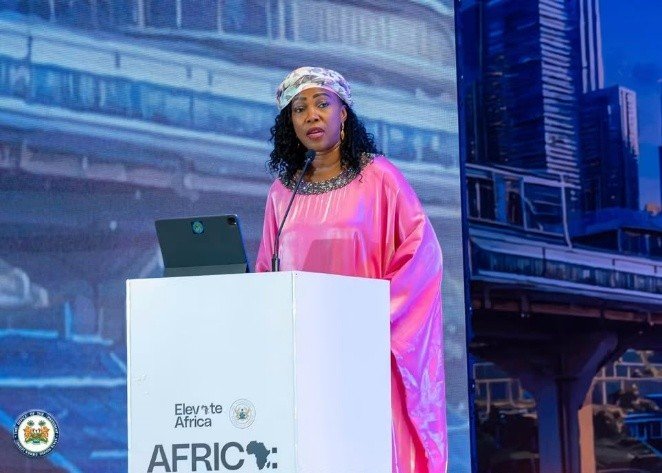
She made the call while addressing the Elevate Africa Conference in Ghana, where she spoke on the theme of Women in Leadership and Fostering Peace, using the platform to highlight the relationship between women’s empowerment, inclusive governance and sustainable peace across the continent.
Speaking in her capacity as First Lady of Sierra Leone and President of the Organisation of African First Ladies for Development (OAFLAD), Dr Bio argued that African women must be recognised not simply as recipients of development initiatives but as active contributors to shaping policies, strengthening institutions and building peaceful societies.
Her intervention placed women’s political participation and leadership at the centre of Africa’s development conversation, emphasising that meaningful progress requires women to have an equal voice in decisions affecting their communities and countries.
According to her, Africa cannot fully realise its potential if half of its population continues to face barriers to leadership, representation and opportunities.
She stressed that lasting peace cannot be achieved through political agreements and institutional arrangements alone, but requires the meaningful involvement of women in governance, conflict prevention and peacebuilding.
Drawing on Sierra Leone’s experience, Dr Bio highlighted the importance of addressing issues affecting women and girls at the community level, particularly gender-based violence, limited access to education and the social and economic barriers that prevent women from reaching their full potential.
She maintained that the foundations of peaceful societies must begin within homes, schools and communities, where respect for women’s rights, the protection of children and equal opportunities can be promoted from an early age.
Reflecting on her advocacy through the Hands Off Our Girls campaign, the First Lady emphasised the importance of protecting girls from sexual violence, exploitation and other harmful practices that threaten their education, dignity and future prospects.
She underscored that safeguarding girls is not only a human rights responsibility but also an essential investment in the future stability and development of African societies.
Her message reinforced the need for governments, civil society organisations, educational institutions and development partners to strengthen efforts towards ending violence against women and girls while expanding access to quality education and economic opportunities.
The First Lady’s emphasis on protecting girls also highlighted the connection between gender equality and peace, noting that communities cannot achieve sustainable development when women and girls continue to experience violence, discrimination and exclusion.
She called for greater investment in women and young girls, particularly through education, leadership development and opportunities that enable them to participate meaningfully in national development.
Beyond highlighting the challenges facing African women, Dr Bio urged governments and institutions across the continent to move from commitments and declarations to practical action.
She called for more inclusive institutions, stronger opportunities for emerging women leaders and policies that guarantee women’s meaningful participation in peacebuilding, governance and development.
She further emphasised that women’s leadership should not be treated as a symbolic representation or an issue of political convenience, but as an important component of effective governance and sustainable development.
According to her, women possess the experience, knowledge and leadership capacity required to contribute to resolving conflicts, strengthening communities and shaping the future of their countries.
Her message also highlighted the importance of collaboration between men and women, stressing that achieving gender equality and lasting peace requires collective responsibility rather than placing the burden solely on women.
She encouraged African leaders and stakeholders to create environments in which women can exercise leadership, influence public policy and contribute to decisions without facing discrimination or unnecessary barriers.
Dr Bio’s participation at the Elevate Africa Conference further provided an opportunity to project Sierra Leone’s experience and its advocacy for women’s rights onto a broader continental platform.
As President of OAFLAD, her message aligned with the organisation’s wider focus on improving the lives of women, children and vulnerable communities through advocacy, partnerships and development initiatives.
Her intervention reinforced the argument that women’s participation in leadership is closely connected to the continent’s broader ambitions for peace, economic progress, social justice and inclusive development.
Concluding her message, the First Lady called for unity, courage and a shared commitment among African leaders to build a continent where women and men work together as equal partners.
She expressed hope that African governments would translate their commitments into measurable progress, ensuring that women’s contributions are recognised not only in public speeches but also in policies, institutions and national development programmes.
“When women lead, nations gain. When women participate, peace grows stronger. And when women and men work together with courage, justice, and purpose, Africa rises!” she declared.
She also invoked Allah’s guidance and blessings for African leaders and prayed for unity, lasting peace and prosperity across the continent.
Her message at the conference placed a renewed spotlight on the need for African countries to move beyond acknowledging women’s contributions and create concrete opportunities for women to help determine the continent’s political, social and economic future.