
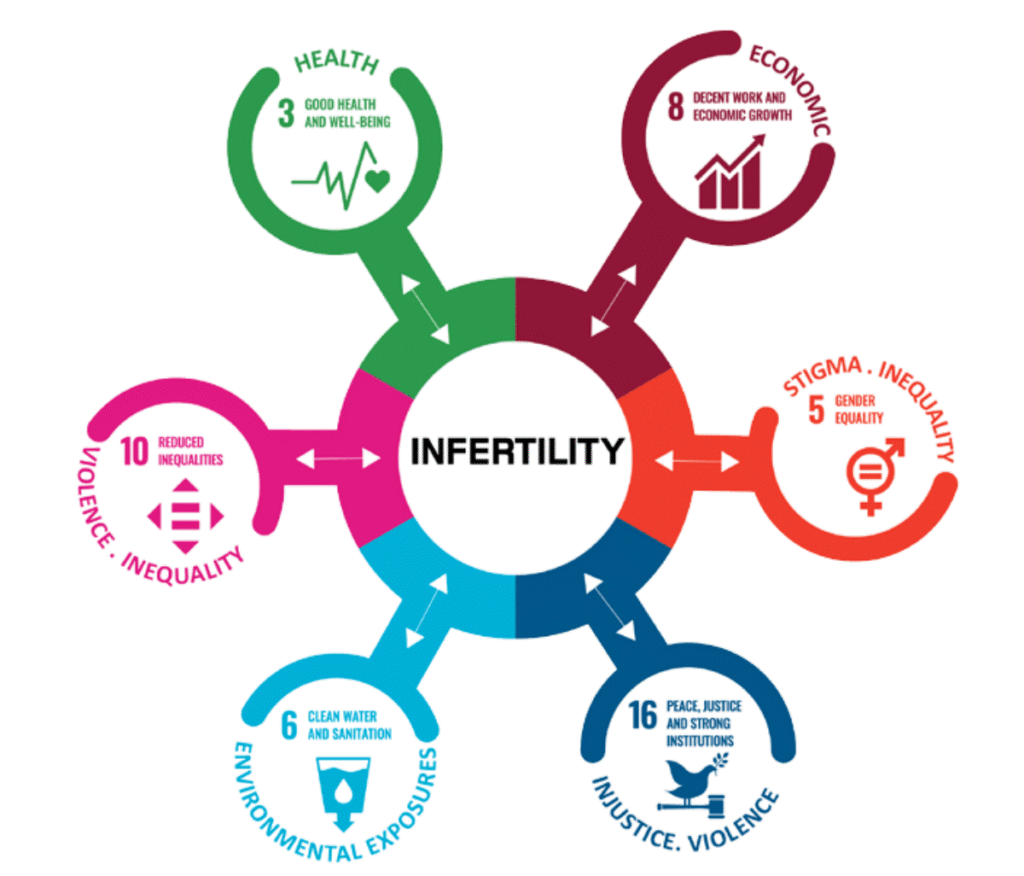
How Infertility Stigma Threatens Women’s Lives and Mental Health
In the quiet consulting rooms of Freetown’s maternity hospitals and the remote clinics of rural chiefdoms, a silent crisis unfolds daily. Infertility in Sierra Leone is rarely treated merely as a medical challenge; it is frequently weaponized as a social curse, a moral failure, and a marital catastrophe. Within patriarchal communities across the country, childlessness falls disproportionately on the shoulders of women, stripping away their dignity, threatening their marriages, and pushing them into profound psychological distress.
Despite national strides in healthcare advocacy and public health communication, reproductive health education often focuses strictly on family planning, maternal mortality, and safe childbearing. Conversely, the profound trauma of involuntary childlessness remains heavily stigmatized. This report investigates the cultural roots of infertility stigma in Sierra Leone, examines its devastating social and psychological consequences, and highlights the urgent need for structural and medical reforms to dismantle these archaic prejudices.
The Cultural Landscape: Why Infertility is Misunderstood
To understand the weight of infertility stigma in Sierra Leone, one must examine the socio-cultural architecture of marriage and lineage. In many communities, a woman’s social value is inextricably tied to her reproductive capacity. Marriage is often viewed not just as a union of two individuals, but as an alliance of families whose primary expectation is the continuation of the family name.
According to reproductive health experts and sociological studies in West Africa, childlessness is frequently perceived through a supernatural or moral lens. When a couple fails to conceive, the community rarely considers medical factors such as male factor infertility, tubal blockages, or hormonal imbalances. Instead, blame is swiftly directed at the woman, often framed as punishment for past misdeeds, spiritual affliction, or failure to appease ancestral spirits.
“In our society, a woman is expected to prove her fertility almost immediately after marriage. When months turn into years without a pregnancy, the whispering begins. Families intervene, sometimes demanding that the husband take a second wife or send the first one back to her family. The psychological toll of this constant surveillance is suffocating.”
Dr. Aminata Sesay, Public Health Physician and Gender Advocate
The Gendered Double Standard: Ignoring Male Factor Infertility
Globally, medical data indicates that male factor infertility accounts for approximately 40% to 50% of all infertility cases. However, in traditional Sierra Leonean settings, masculinity is fiercely equated with biological fatherhood. Consequently, the possibility of male infertility is rarely entertained, let alone investigated.
This deep-seated bias shields men from scrutiny while exposing women to intense psychological and physical harm. Women endure invasive traditional concoctions, painful scarification, and spiritual cleansings, while men are often reluctant to undergo basic semen analysis due to social stigma and fragile notions of pride.
Public health education campaigns run by organizations like the Ministry of Health and various civil society groups have slowly begun addressing maternal health, yet men remain largely unengaged in dialogue surrounding reproductive failures. Until reproductive health is framed as a shared biological responsibility, women will continue to bear an unfair burden of blame.
The Psychological Toll: Anxiety, Depression, and Social Isolation
The mental health dimensions of infertility in Sierra Leone are catastrophic, yet they remain largely unaddressed within the national healthcare framework. Infertility triggers a cascade of psychological trauma, including chronic anxiety, severe depression, low self-esteem, and social isolation.
Interviews with counselors in Freetown and Bo reveal that many women suffering from infertility experience symptoms analogous to post-traumatic stress disorder (PTSD). They live in constant fear of abandonment. In customary marriages which lack the legal protections of statutory unions childless women are frequently divorced arbitrarily, disinherited, or chased away from family land.
Social Ostracization: Women facing infertility are often excluded from naming ceremonies, baby showers, and community leadership roles, viewed superstitiously as bad omens.
Domestic Violence: Failure to conceive is a leading trigger for verbal and physical abuse within households, with husbands and in-laws justifying mistreatment under the guise of cultural frustration.
Financial Exploitation: Desperate for a solution, many vulnerable women fall prey to fraudulent traditional healers and self-proclaimed spiritualists who drain their meager financial resources with false promises of miraculous cures.
The Legal and Human Rights Dimensions
From a legal standpoint, the rights of women facing reproductive challenges are safeguarded under various international conventions ratified by Sierra Leone, including the Convention on the Elimination of All Forms of Discrimination Against Women (CEDAW) and the Protocol to the African Charter on Human and Peoples’ Rights on the Rights of Women in Africa (Maputo Protocol).
Domestically, the Customary Marriage and Divorce Act and the Devolution of Estates Act aim to protect women’s rights within marriages and inheritance. However, enforcement remains weak, particularly in rural areas where customary law supersedes statutory provisions. When a marriage dissolves due to infertility, customary practices routinely leave the woman destitute, homeless, and socially disgraced.
Human rights lawyers argue that stigmatizing and abusing women over infertility constitutes a grave violation of fundamental human rights, specifically the right to bodily integrity, dignity, equality, and freedom from cruel, inhuman, or degrading treatment.
Pathways to Change: Medical Interventions and Policy Recommendations
Dismantling infertility stigma requires a multi-sectoral approach involving government agencies, healthcare providers, religious leaders, traditional rulers, and the media.
1. Integrating Reproductive Health Services
The public health system must expand specialized reproductive health clinics beyond major urban centers. Affordable diagnostic services for both men and women such as hormone profiling, ultrasound scans, and semen analysis must be integrated into primary healthcare delivery.
2. Community Sensitization and Faith-Based Dialogue
Religious and traditional leaders hold immense sway in Sierra Leonean communities. Engaging Imams, pastors, and paramount chiefs as advocates can fundamentally shift public perception. By preaching that infertility is a medical condition rather than a spiritual curse, these leaders can help eliminate the shame associated with childlessness.
3. Media Responsibility and Ethical Reporting
Journalists and media practitioners play a pivotal role in shaping societal attitudes. Reporting on reproductive health must move away from sensationalism and victim blaming. Stories must highlight medical facts, champion human rights, and provide platforms for experts to debunk myths surrounding infertility.
4. Psychosocial Support Systems
Hospitals and community health centers must establish counseling units specifically trained in reproductive grief and trauma management, ensuring that individuals and couples navigating infertility have access to professional mental health support.
Conclusion: A Call for Compassion and Action
Infertility is a medical reality, not a moral failing. As Sierra Leone continues its path toward national development and gender equality, the nation can no longer afford to ignore the silent suffering of thousands of women and couples battling reproductive challenges.
Breaking the stigma surrounding infertility requires courage, open dialogue, and systemic reform. By replacing judgment with empathy, superstition with science, and discrimination with legal protection, Sierra Leone can foster a more inclusive society where every individual regardless of their reproductive status is treated with dignity, respect, and unconditional human worth.