By Mackie M. Jalloh
Sierra Leone and Liberia have taken a bold step toward reshaping West Africa’s transport landscape with the launch of a 255-kilometre road project designed to strengthen regional integration, trade, and mobility. The initiative, unveiled jointly by President Julius Maada Bio of Sierra Leone and President Joseph Nyuma Boakai Sr. of Liberia, signals a new era of cooperation between the two Mano River Union neighbours.
Unlike previous piecemeal upgrades, this project is conceived as a transformative corridor that will knit together communities, markets, and borders. Implemented under a Design, Build, Operate and Transfer concession model, the development reflects a growing reliance on public private partnerships to finance large scale infrastructure in fiscally constrained economies. By leveraging private sector expertise and investment, both governments aim to deliver modern, durable roads that can withstand heavy traffic and seasonal challenges.
The project is divided into two major arteries. The Western Corridor will feature a four-lane highway stretching from St. Paul Bridge to Klay, extending onward to Bo Waterside, with additional spurs to Tubmanburg and Robertsport. This corridor is particularly significant as Bo Waterside serves as one of the busiest border crossings between Sierra Leone and Liberia, often plagued by bottlenecks and poor road conditions. The Northern Corridor, meanwhile, will see the construction of an 86 kilometre two-lane road linking Voinjama to Mendikorma, opening up trade routes toward Sierra Leone and Guinea.
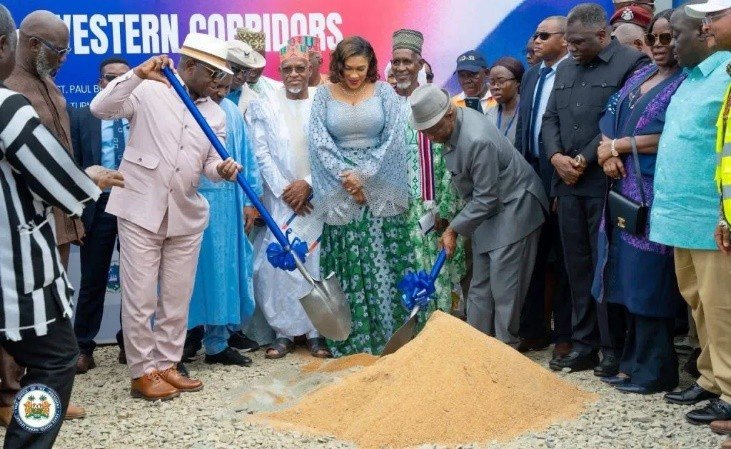
At the groundbreaking ceremony, President Bio hailed the project as a historic milestone that will cut travel times, reduce transport costs, and ease the movement of people and goods across borders. He emphasized that such infrastructure is not only about economics but also about peace dividends, noting that both Sierra Leone and Liberia have emerged from conflict to embrace development through resilience and partnership.
President Boakai was commended for prioritizing infrastructure as a driver of transformation. His leadership underscores Liberia’s determination to rebuild and modernize its transport networks, which were severely damaged during years of civil unrest.
As Chair of the ECOWAS Authority of Heads of State and Government, President Bio framed the project within a broader regional context. He described it as a strategic component of West Africa’s economic architecture, reinforcing ECOWAS’s vision of an integrated market. Improved road networks are expected to boost intra African trade, support agricultural supply chains, and facilitate access to ports and urban centres.
For decades, poor road conditions in the Mano River basin have constrained commerce, isolated rural communities, and inflated transport costs. Seasonal rains often rendered key stretches impassable, disrupting trade and livelihoods. The new project aims to reverse this legacy by providing reliable, modern infrastructure that can sustain economic activity year-round.
Analysts view the concession model as a pragmatic solution, balancing government oversight with private sector efficiency. Once completed, the corridors will not only enhance cross border mobility but also stimulate investment in agriculture, mining, and tourism. The project is expected to generate jobs during construction and create long term opportunities by linking producers to markets more effectively.
In essence, the 255-kilometer road initiative is more than a transport upgrade it is a symbol of regional renewal, a testament to peace, and a foundation for shared prosperity. By joining forces, Sierra Leone and Liberia are demonstrating that infrastructure can be a powerful tool for integration, resilience, and growth across West Africa.