
By Mariama Bundu
In a significant intervention aimed at strengthening vulnerable households and improving children’s access to education, Street Child of Sierra Leone has disbursed over NLe 6.5 million to 3,606 caregivers across the country. The initiative marks one of the organization’s most extensive financial support efforts in recent months, targeting families at the frontline of economic hardship.
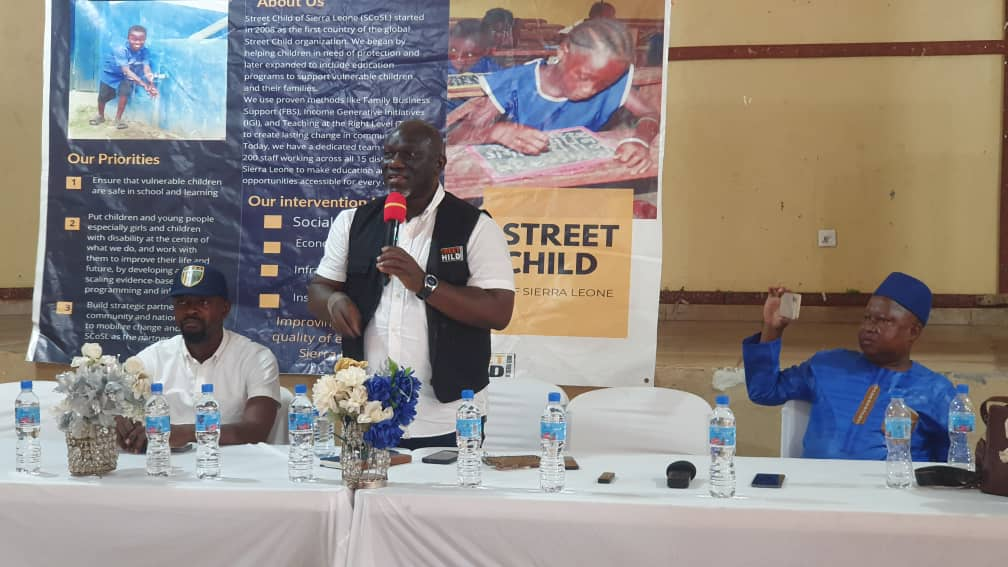
The official disbursement ceremony, held on Friday, March 27, 2026, at Boxton Hall on Charles Street in Freetown, brought together beneficiaries, community stakeholders, and development partners. The event served not only as a distribution platform but also as a reaffirmation of the organization’s long-standing commitment to empowering communities through sustainable support systems.
According to Country Director Kelfa Kargo, the initiative deliberately prioritizes women, who make up more than 80 percent of the beneficiaries. These include widows, single mothers, and other female caregivers who often bear the primary responsibility of providing for children under challenging socio economic conditions. This targeted approach reflects a broader understanding that empowering women has a multiplier effect on household stability and child welfare.
The program spans ten districts nationwide Kenema, Kailahun, Port Loko, Kambia, Western Area Urban, Western Area Rural, Tonkolili, Koinadugu, Falaba, and Bombali demonstrating a wide geographic reach that includes both urban centers and hard-to-access rural communities. By extending support across these regions, Street Child is addressing disparities in economic opportunity and educational access that often disadvantage children in remote areas.
At the core of the initiative is a practical model: providing caregivers with financial grants to either start or expand small scale businesses. These businesses ranging from petty trading to agricultural ventures are expected to generate sustainable income streams that directly support children’s education, including school fees, learning materials, and daily needs.
However, the intervention goes beyond financial assistance. Before receiving the grants, all beneficiaries underwent structured training in basic business management and financial literacy. These sessions were designed to equip caregivers with the skills needed to manage funds responsibly, plan for growth, and navigate common business challenges. This capacity building component is critical, ensuring that the funds translate into long-term impact rather than short term relief.
To reinforce accountability and success, the organization has introduced a system of continuous monitoring and mentoring. Field officers will conduct weekly follow ups, providing guidance and support to beneficiaries as they implement their business plans. This hands on approach is expected to improve outcomes and help caregivers overcome operational difficulties.
In an additional incentive aimed at promoting savings culture, Street Child announced a “matching grant” scheme. Caregivers who consistently participate in the organization’s weekly savings program will become eligible for additional financial support in the coming months. This strategy not only encourages financial discipline but also strengthens the capacity of beneficiaries to scale their businesses over time.
Kelfa Kargo emphasized that the initiative is rooted in a simple but powerful principle: when caregivers are economically empowered, children benefit directly. Stable households are better positioned to keep children in school, reduce exposure to exploitation, and create an environment conducive to learning and development.
Street Child reaffirmed its commitment to working in underserved and hard-to-reach communities across Sierra Leone. The organization continues to focus on holistic interventions that combine economic empowerment, education support, and child protection.
As the country grapples with ongoing economic challenges, initiatives like this provide a critical lifeline for thousands of families. More importantly, they represent a sustainable pathway toward breaking cycles of poverty ensuring that children not only stay in school but also have the opportunity to build brighter, more secure futures.