
By Mackie M. Jalloh
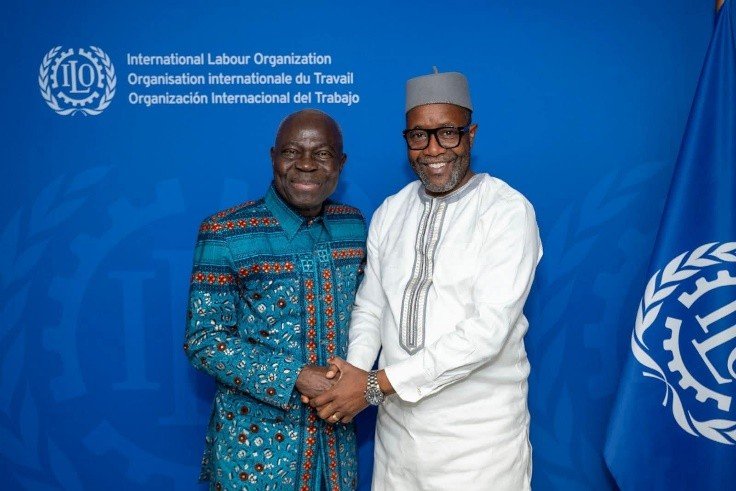
Sierra Leone has taken another decisive step toward strengthening its labour sector and positioning its workforce at the center of national development following high-level discussions between President Julius Maada Bio and the Director General of the International Labour Organization (ILO), Gilbert F. Houngbo.
The engagement, held on the margins of ongoing international engagements, highlighted Sierra Leone’s growing determination to modernize its labour governance framework, improve employment data systems, and create stronger mechanisms for protecting workers’ rights while advancing sustainable economic growth.
At the heart of the discussions was the government’s intention to conduct a nationwide Labour Force Survey, a major undertaking expected to provide comprehensive and reliable statistics on the country’s labour market. The survey is anticipated to generate critical information on employment levels, unemployment trends, skills distribution, labour participation rates, and the challenges facing both formal and informal sector workers.
For policymakers, development partners, and investors, access to accurate labour market data is increasingly viewed as essential for designing effective interventions that can address unemployment, boost productivity, and support economic planning. The survey is therefore expected to serve as a strategic tool for guiding future decisions in areas such as youth employment, vocational training, social protection, and private sector development.
Beyond data collection, the meeting placed significant emphasis on strengthening social dialogue as a key pillar of labour sector reform. Both parties acknowledged the importance of creating institutional platforms where government representatives, employers, trade unions, and workers can engage constructively on issues affecting the world of work.
Experts have long argued that meaningful social dialogue contributes to industrial peace, reduces workplace disputes, and promotes inclusive decision-making. By reinforcing these structures, Sierra Leone aims to foster stronger collaboration among stakeholders and ensure that labour related policies are developed through consultation and consensus rather than confrontation.
The discussions also touched on broader efforts to align Sierra Leone’s labour policies with international best practices and standards. As the country continues to pursue economic transformation, labour rights and decent work remain central components of its development agenda. Ensuring safe working conditions, fair wages, equal opportunities, and protection for vulnerable workers were among the themes that resonated throughout the engagement.
President Bio reiterated his administration’s commitment to building a labour environment that supports economic resilience while safeguarding the dignity and welfare of workers. The government views human capital development as a critical driver of national progress and recognizes that a productive workforce is essential to achieving long-term prosperity.
For the ILO, the discussions represented an opportunity to deepen cooperation with Sierra Leone and support ongoing reforms aimed at strengthening labour institutions. The organization has remained a key global partner in promoting social justice, decent work, and employment opportunities across member states.
The bilateral meeting ultimately reflected a shared vision between Sierra Leone and the ILO to create a labour ecosystem that is data-driven, inclusive, and responsive to the realities of a rapidly changing global economy. As the country advances its development priorities, enhanced collaboration with international partners is expected to play a vital role in building stronger institutions and expanding opportunities for workers across all sectors. Observers note that the outcomes of the engagement could have far reaching implications for employment governance, workforce planning, and social protection initiatives in Sierra Leone. With renewed commitment from both sides, the partnership is expected to contribute significantly to the country’s efforts to create decent jobs, promote economic inclusion, and accelerate sustainable national development.