By Mackie M. Jalloh
Sierra Leone has positioned itself as a burgeoning hub for agricultural investment with the successful hosting of its inaugural Agri-Food Investment Summit. The event, held in Freetown, brought together over 25 international investors and 40 local companies to explore opportunities across the country’s thriving agricultural sector.
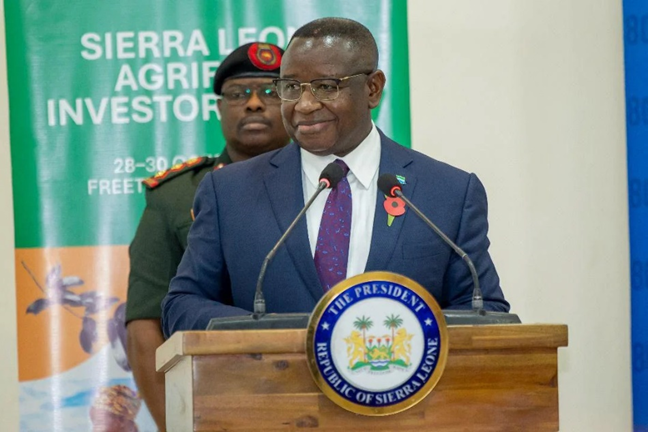
President Julius Maada Bio, addressing the summit, painted a compelling vision of Sierra Leone as a nation where agriculture is not just a sector but the backbone of economic transformation. “Agriculture is the heartbeat of our economy. With 5.4 million hectares of arable land, less than 20 percent is currently cultivated. This is a call to action for investors to join us in unlocking the full potential of our land,” he declared.
The President emphasized that Sierra Leone is no longer just a place to observe opportunity but to actively invest. He described the government’s Feed Salone Initiative as a transformative movement designed to modernize farming, improve food security, and create sustainable livelihoods. “Feed Salone is not merely a programme; it is a movement to restore pride, dignity, and productivity to our farmers. From our farms to our markets, we will feed ourselves and prosper,” he said, highlighting the initiative’s strategic impact on local communities and national growth.
Economic and financial stability underpinned the President’s pitch to investors. Dr. Ibrahim Stevens, Governor of the Bank of Sierra Leone, reinforced this point, describing agriculture as a driver of macroeconomic stability and inclusive growth. “With prudent macroeconomic management, our economy is primed for robust growth. Strategic investment in agriculture can strengthen food systems, boost exports, and create jobs,” he noted.
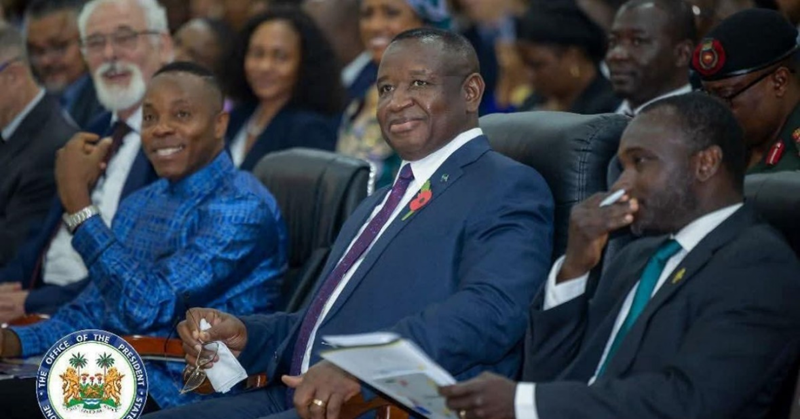
The summit showcased key sectors ripe for investment, including rice, cassava, poultry, livestock, cocoa, and coffee. Private sector leaders, like Mohamed Sow, Finance Director of PC Holdings Group, shared their experience, highlighting over US$150 million invested in local agricultural ventures over the past seven years. Sow reported production of onions, maize, palm oil derivatives, and seasoning cubes, now reaching consumers across West Africa, underscoring Sierra Leone’s growing role as a regional food supplier.
Chief Minister Dr. David Moinina Sengeh lauded President Bio’s leadership, citing consistent political will, policy stability, and clear vision as factors that distinguish Sierra Leone from other investment destinations. “The President’s support and direction provide the confidence needed for both local and foreign investors to expand operations,” he said.
Minister of Agriculture, Dr. Henry Musa Kaka, explained that the summit’s objective was to connect investors directly with indigenous farmers, enabling knowledge transfer, technology adoption, and enhanced productivity. He emphasized that the government is facilitating investment by simplifying access to land, offering tax incentives, and ensuring transparent regulatory frameworks.
The summit concluded with renewed commitments from government and private sector stakeholders to accelerate agricultural growth through innovation, strategic partnerships, and sustainable practices. President Bio reiterated that every investment in agriculture is a “promise to the land” and a step toward Sierra Leone’s long-term goal of food sovereignty and economic resilience.
As Sierra Leone moves to expand its cultivated land, modernize farming systems, and attract new capital, the Agri-Food Investment Summit has set the stage for a transformative era in national agriculture, demonstrating that the country is ready to lead West Africa in sustainable, profitable farming.