
Unlocking Women’s Empowerment at All Levels Across Africa
By Mackie M. Jalloh
Introduction: The Catalyst of Complete Inclusion
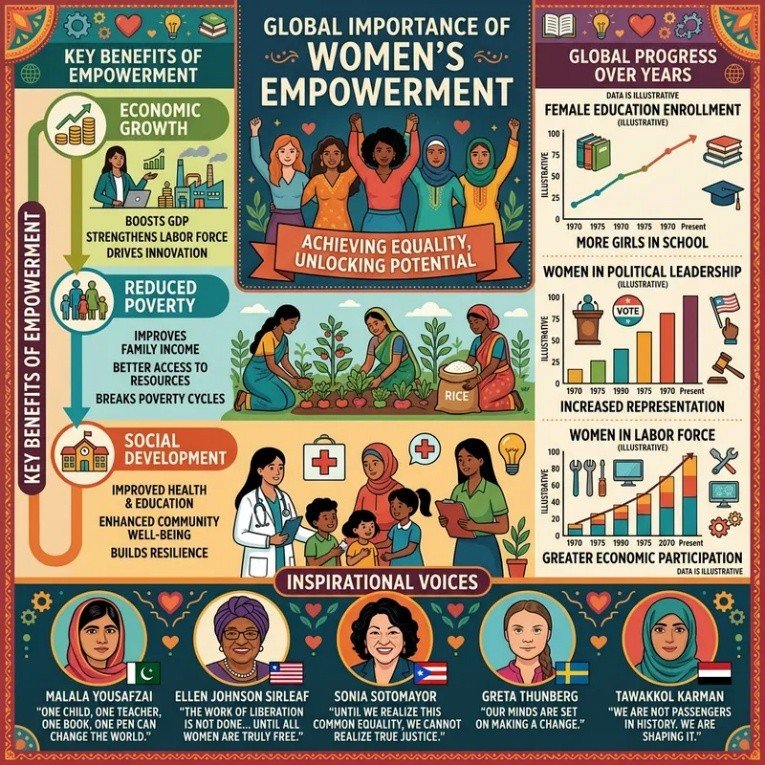
Development is not a spectator sport, nor is it a process that can reach its full potential while sidelining half of its population. Across the vast and dynamic expanse of the African continent, a profound awakening is redefining the contours of governance, economics, and social equity. True national development requires far more than sporadic intervention; it demands comprehensive, multi-tiered women’s empowerment that penetrates political corridors, financial markets, rural households, and healthcare systems.
In alignment with the visionary framework of the Merck Foundation’s “More Than a Mother” campaign—which champions holistic transformation, de-stigmatization, and female advancement at every tier of society—this investigation explores the architecture of women’s empowerment. From the legislative milestones reshaping Sierra Leone to the grassroots economic movements sweeping sub-Saharan Africa, the modern era demonstrates that empowering women is the ultimate multiplier of human progress.
I. Political and Institutional Transformation: The Power of Representation
For generations, political leadership across much of developing Africa remained an exclusive domain dominated by patriarchal structures. However, systemic exclusion is steadily giving way to deliberate institutional design.
In Sierra Leone, the implementation of the historic Gender Equality and Women’s Empowerment (GEWE) Act has altered the political DNA of the nation. By mandating a minimum 30 percent representation quota for women across governance structures, public sector employment, and parliamentary seats, the legislation has transitioned women from symbolic participants to active architects of policy.
As highlighted during national constitutional review engagements, female legislators and civil society actors continue to push for deeper inclusion, ensuring that legal protections translate into tangible power. Across the continent, similar movements championed by African First Ladies through the Merck Foundation First Ladies Initiative (MFFLI) have cemented women’s leadership as a central prerequisite for sustainable development.
II. Economic Liberation: Moving from Informal Survival to Formal Sovereignty
Political seats and legal charters, while essential, remain fragile if women remain economically disenfranchised. Across sub-Saharan Africa, women form the backbone of agricultural production and informal commerce, yet they historically face severe bottlenecks in accessing credit, formal land ownership, and digital tools.
In Sierra Leone, recent structural interventions—including the Customary Land Rights Act, which guarantees women equal rights to own, lease, and administer land without gender discrimination are dismantling centuries-old economic barriers. Furthermore, integrated enterprise development frameworks are actively working to transition informal subsistence trading into competitive, growth-oriented businesses through:
Financial Inclusion: Expanding micro-credit facilities and village savings and loan associations (VSLAs).
Digital Literacy: Equipping women entrepreneurs with modern technological skills to navigate digital marketplaces.
Value Addition: Training female farmers and cooperative owners to process, package, and market agricultural goods competitively.
When a woman controls her own income, household nutrition improves, children stay in school longer, and local economies experience exponential resilience.
III. Social and Cultural Shifts: Redefining Value Beyond Stereotypes
Empowerment at all levels must also target deep-seated cultural perceptions. For decades, societal worth for women has been narrowly measured through domestic subservience or reproductive conformity. Campaigns like the Merck Foundation’s “More Than a Mother” have directly confronted these biases by dismantling the social stigmas associated with childlessness and infertility, establishing that a woman’s dignity is inherent and complete in its own right.
In tandem, pan-African efforts to eradicate harmful practices such as Child Marriage and Female Genital Mutilation (FGM) protect young girls from having their life trajectories truncated before they even begin. By safeguarding girls’ education and promoting STEM fields for young women, society nurtures a future generation of female scientists, technologists, doctors, and engineers.
IV. Voices of Impact: Lived Realities of Resilient Women
The true measure of empowerment is reflected in the daily lives of women who have broken through systemic ceilings.
In the Moyamba District, Isatu Barrie operates a thriving agricultural processing cooperative that was once a small, hand-to-mouth subsistence farm. Through targeted district-level business coaching, digital market linkages, and secure land rights under modern legal protections, Isatu now supplies commercial buyers across provincial towns.
“For a long time, working the land meant working endlessly with nothing to show for it because we owned neither the land nor the profits,” Isatu explains, her eyes bright with determination. “When women are given the tools, the training, and the legal right to stand on equal ground, we don’t just feed our families we uplift entire communities. Empowerment is not a favor; it is unlocking what was always there.”
V. Strategic Imperatives for the Future
To sustain and accelerate women’s empowerment across Sierra Leone and the wider African continent, stakeholders must pursue a unified agenda:
1. Enforcing Legal Compliance: Rigorously implementing the GEWE Act, Customary Land Rights Act, and child protection laws across both urban centers and remote rural councils.
2. Expanding Financial Ecosystems: Scaling micro-finance networks and lowering collateral barriers so grassroots women entrepreneurs can scale their enterprises.
3. Institutionalizing Health Equity: Strengthening maternal healthcare and reproductive support systems to ensure women lead healthy, productive lives free from preventable complications.
Conclusion: The Unstoppable Rise of African Women
The empowerment of women at all levels is the definitive yardstick of a progressive society. By fusing political representation with economic autonomy, legal protection, and cultural re-education, nations across Africa are tapping into their most powerful engine of growth.
As championed by transformative global health and development movements, when you empower a woman, you empower a nation proving that women are the architects, leaders, and unstoppable guardians of Africa’s prosperous future.