
By Marion (Rion) Bangura
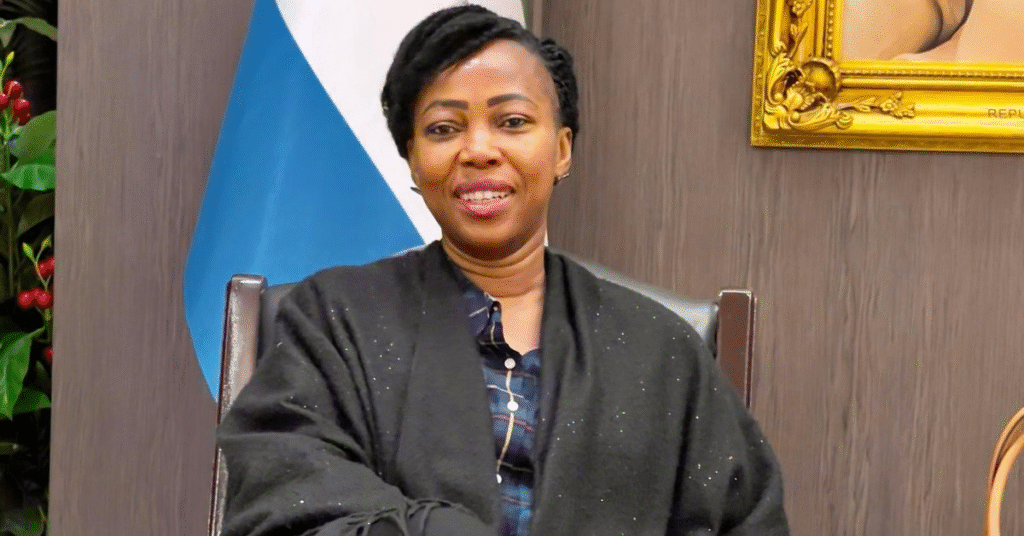
Beyond the ceremonial expectations traditionally associated with her office, Fatima Maada Bio is steadily redefining the role of First Lady in Sierra Leone by positioning herself as an active force in governance, advocacy, and national development. Her evolving influence reflects a deliberate shift from symbolic representation to hands-on engagement with some of the country’s most pressing social challenges.
In recent years, Dr. Bio has built a reputation as a central figure in advancing policies and programs that directly impact vulnerable populations. Her work cuts across multiple sectors, including gender equality, child protection, education, and public health areas that remain critical to Sierra Leone’s long-term development trajectory. Rather than operating on the margins, she has embedded herself within national conversations, working alongside policymakers, institutions, and international partners to drive measurable change.
At the core of her domestic agenda is her leadership of the Hands Off Our Girls campaign, a nationwide movement aimed at combating sexual and gender based violence. Under her stewardship, the campaign has moved beyond awareness-raising to influence policy discussions, institutional reforms, and community level interventions. It has contributed to amplifying survivor voices, strengthening reporting mechanisms, and sustaining national attention on issues that were once underreported or culturally suppressed.
Her approach has been characterized by visibility and persistence. Through public engagements, school visits, and community dialogues, she has consistently reinforced messages around dignity, protection, and equal opportunity for women and girls. These efforts have not only elevated the national discourse but have also encouraged broader societal participation in addressing gender based violence.
Dr. Bio’s influence is not confined to Sierra Leone. On the global stage, she has increasingly positioned herself as an advocate for African perspectives in international development dialogues. Her recent participation in the Global Coalition Summit titled “Fostering the Future Together,” held at the White House, underscores her expanding diplomatic and advocacy footprint. At the summit, she engaged with Melania Trump and other global leaders on issues relating to child safety in the digital age.
During these engagements, Dr. Bio emphasized the importance of responsible technology use, child protection frameworks, and inclusive education systems that prepare young people for a rapidly evolving digital world. Notably, she also used the platform to mobilize support among African First Ladies, advocating for a unified continental voice in shaping global policies that affect children and youth.
Back home, her office has maintained close collaboration with the Government of Sierra Leone, as well as civil society organizations and international development agencies. These partnerships have facilitated the mobilization of resources for key sectors, including healthcare delivery, educational support, and psychosocial services for survivors of abuse. By aligning her initiatives with national development priorities, Dr. Bio has ensured that her interventions complement broader government strategies rather than operate in isolation.
Observers often point to her leadership style as a defining factor in her effectiveness. Combining empathy with assertiveness, she has demonstrated an ability to navigate both grassroots realities and high-level policy environments. This dual engagement working directly with communities while influencing decision making at the top has enabled her to maintain relevance across different layers of society.
Supporters argue that her growing prominence reflects a broader shift in public expectations of leadership, particularly for women in influential positions. They highlight her consistency, visibility, and results driven approach as indicators of a leadership model that prioritizes impact over protocol. Critics, while acknowledging her activism, often call for sustained institutionalization of her initiatives to ensure long term continuity beyond individual leadership.
As Sierra Leone continues to confront socio-economic challenges, including inequality, access to quality education, and healthcare gaps, Dr. Fatima Maada Bio’s role remains significant. Her work illustrates how strategic advocacy, when combined with institutional collaboration, can contribute meaningfully to national development.
In redefining the boundaries of her office, she is not only shaping policy conversations but also influencing how leadership is perceived in Sierra Leone. Her trajectory suggests a continued commitment to building a society where protection, opportunity, and inclusion are not privileges, but guaranteed rights for every citizen.