By Mackie M. Jalloh
Sierra Leone’s ambitious Feed Salone Initiative is beginning to yield visible results, as local markets across the country report a steady decline in rice prices—signaling renewed confidence in the nation’s food security agenda.
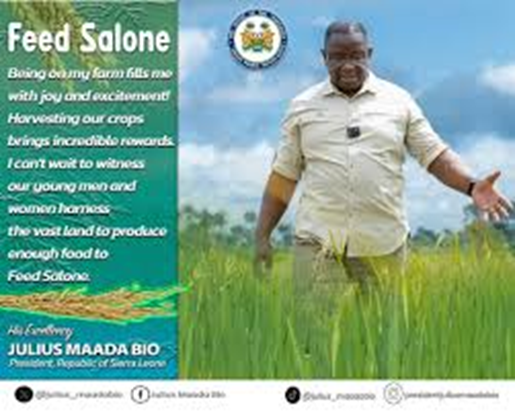
The initiative, launched under the leadership of President Julius Maada Bio, has been hailed as one of the most transformative agricultural and economic programs in Sierra Leone’s recent history. It aims not only to increase food production but also to empower farmers, modernize agriculture, and reduce dependence on imported commodities that have long drained the national economy.
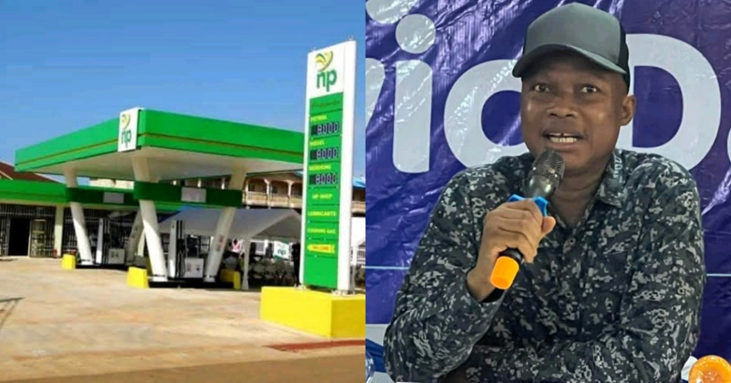
Speaking on Liberty Online Television in Freetown, the Presidential Spokesperson, Hon. Alpha Kanu, credited the downward trend in rice prices to the government’s deliberate policies under the Feed Salone program. He described the initiative as more than a farming project—it is, in his words, “a national economic revolution designed to restore self-sufficiency and dignity through food production.”
Hon. Kanu explained that the government’s two-pronged strategy—boosting local production while ensuring market stability—has started to reshape the agricultural landscape. “By supporting our local farmers with inputs, machinery, and training, and by working with importers to stabilize supply chains, we are making food more affordable for every Sierra Leonean,” he said.
Over the past few months, markets in Freetown, Bo, Makeni, and Kenema have shown tangible signs of change. Traders and consumers alike are observing a gradual reduction in the retail cost of rice—a commodity that sits at the heart of every Sierra Leonean household.
Market women at Dove Cot in Freetown told reporters that a 50kg bag of rice, which previously cost a record-high amount earlier this year, has dropped in price for the first time in months. In Bo and Kenema, local rice varieties have become more available as farmers begin harvesting from the latest planting season supported under the Feed Salone scheme.
For many citizens, this development offers a welcome relief after years of economic strain and global supply disruptions that pushed food prices to unprecedented levels.
Hon. Kanu emphasized that the government is fully committed to sustaining the progress. “Our vision is clear,” he said. “We want a Sierra Leone where no family goes hungry and where our farmers can take pride in feeding the nation. Food security is the foundation of national independence and economic resilience.”
The Feed Salone Initiative focuses on four key pillars: mechanized agriculture, improved access to inputs, farmer training, and public-private partnerships. Through collaboration with private investors and local cooperatives, the initiative has already begun revitalizing hundreds of hectares of previously idle farmlands in districts such as Bombali, Kambia, and Tonkolili.
Agricultural experts say the results now emerging are evidence that the initiative’s model—combining technology, policy reform, and grassroots participation—is working. According to economic analysts, sustained production growth could not only lower food costs but also reduce Sierra Leone’s reliance on imported rice, improving the country’s trade balance and strengthening its currency.
Beyond economic implications, the Feed Salone Initiative carries a strong social message. It promotes rural empowerment by creating jobs, improving livelihoods, and restoring hope in agriculture as a viable profession for young people.
Hon. Kanu also reiterated that the government’s success will depend on collective ownership of the program. “We are calling on every Sierra Leonean—farmers, traders, youth, and community leaders—to take part in this transformation. Feeding Salone is not a government slogan; it’s a shared national responsibility,” he remarked.
As the program continues to expand, citizens are beginning to see clear signs that Sierra Leone’s long-standing vision of food self-sufficiency is within reach. The recent drop in rice prices may be just the beginning of a larger story—one that speaks to a nation reclaiming its agricultural potential and building a stronger, more resilient economy for generations to come.